


The first decision when replacing a tap is what type of tap your basin or worktop is set up for. Most older Ealing properties have basins with two tap holes (separate hot and cold pillar taps); modern basins often have one tap hole (mixer/monobloc tap) or three holes (bridge mixer with separate handles). The wrong tap for the basin = a hole that doesn't fit, an awkward filler kit, or a basin that needs replacing.
Pillar taps are separate hot and cold taps with their own spouts. Traditional, cheaper, perfectly suited to older properties with mismatched supplies (cold from mains, hot from a vented cylinder — different pressures don't matter when the supplies are kept separate). Two tap holes required.
Monobloc / mixer taps have one body with a single spout that combines hot and cold. Modern, sleeker, easier one-handed use. Single tap hole required. Need balanced hot and cold supplies (both mains-pressure or both gravity-fed) for predictable performance — or a thermostatic mixer cartridge that compensates internally.
Bridge mixers are the period-style alternative — separate hot and cold handles flanking a central spout, often deck-mounted via three holes. Visually traditional, mechanically modern. Suit Edwardian and Victorian properties where the look matters.
Wall-mounted mixers for bathrooms — stylish, leaves the basin uncluttered, but requires concealed pipework in the wall behind. Best fitted as part of a full bathroom refit when the wall is being plastered anyway.
A like-for-like tap swap on a clean modern basin with isolators already in place is genuinely a 30-minute job. The reason most tap installations take longer is preparation and remediation work — the kind of detail that determines whether the new tap leaks in three weeks or works perfectly for ten years.
Step 1: Isolation. Existing tap isolated at the supply (isolator valves on the hot and cold tails). If isolators aren't fitted (common on older properties), they're fitted as part of the install — saves you a major shut-off the next time the tap needs work.
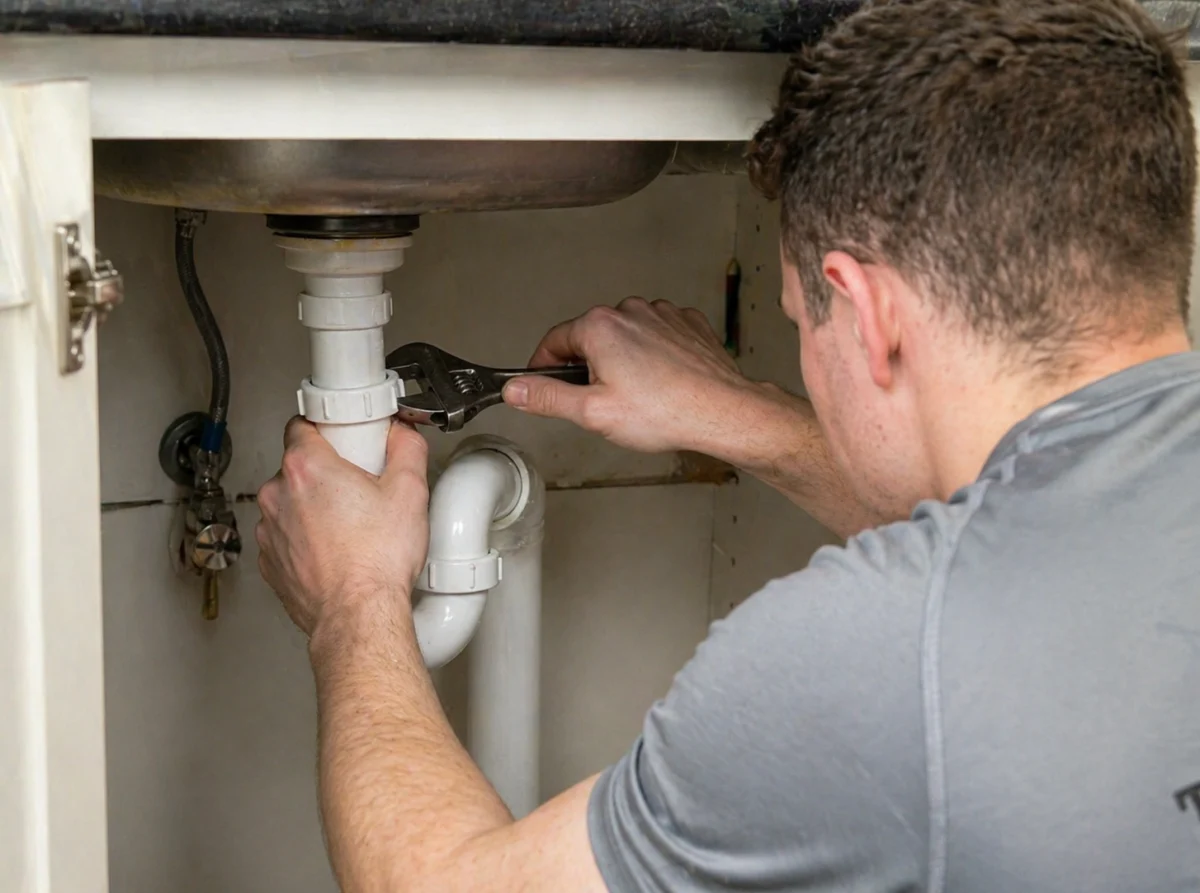
Step 2: Old tap removal. Old tap unscrewed from below. This is where surprises happen on older basins — the back-nut may be heavily corroded, requiring penetrating oil and time. Sometimes the tap can be cut off the supply rather than unscrewed if the back-nut won't budge. Clive carries the right tools for both approaches.
Step 3: Surface preparation. The basin or worktop surface around the tap hole is cleaned of limescale, old sealant residue, and any rust marks. The tap-hole rubber/gasket is replaced (always — old gaskets are perished and won't seal a new tap correctly).
Step 4: New tap fitting. Tap positioned, back-nut tightened from below, level checked. Some modern monoblocs use a stud-and-bracket fixing rather than a traditional back-nut — Clive carries spanners for both types.
Step 5: Tail connections. Hot and cold supply tails connected with new compression olives or push-fit fittings. Some taps come with flexible braided tails (most modern monoblocs); some need new copper tails formed and soldered. Either way, fresh seals on every joint.
Step 6: Pressure test and leak check. Isolators opened slowly, system pressurised, all joints checked under pressure. Tap operated through full hot and cold range, checked for steady flow. The 24-hour soak test is the catch — small weeps that don't show under immediate pressure show up overnight.
Step 7: Cleanup and walk-through. Work area cleaned, packaging disposed of, tap operation walked through with you (especially relevant for thermostatic mixers and instant-hot-water taps). Manufacturer manual handed over.
Mixer showers connect to existing hot and cold supplies and blend them at the valve. Manual mixers are cheapest (£85–£180 fitted plus the unit) but don't compensate for pressure changes elsewhere — flushing the toilet while showering can scald or freeze you. Thermostatic mixers add a temperature-stabilising cartridge that compensates for pressure changes — significantly safer, particularly in households with children or older people. £140–£280 fitted plus the unit.
Electric showers connect only to the cold mains and heat the water at the unit using a 7–10kW heating element. Self-contained, immune to combi-boiler demand issues, but flow rate is limited by the heating element's ability to raise the cold water to shower temperature — typically 8–10 L/min versus 12–15 L/min from a mixer. Need a dedicated electrical supply (radial circuit) — Clive coordinates with an NICEIC electrician for the wiring side. £180–£320 plumbing fit plus the unit and electrical work.
Power showers incorporate a pump to boost flow from gravity-fed (vented cylinder) systems where mains pressure isn't available. Older properties with low-head systems — power showers transform what's possible. £280–£450 fitted plus the unit. Modern combi or unvented systems don't usually need power showers because mains pressure is already adequate.
Digital and smart showers add electronic controls — preset temperatures, programmable shower cycles, smartphone control. More complex installation, more reliance on consistent power supply, more to go wrong over a 10-year horizon — Clive will fit them but typically advises clients to weigh the long-term maintenance vs the convenience.

Outdoor taps look simple but get a surprising number of details wrong on DIY installations. Modern water byelaws require specific protection to prevent backflow contamination of the mains supply, and a tap that works fine in summer can split in winter if not properly drained.
Required protection — every external tap installed since 2002 must include a double-check valve (DCV) on the supply pipework upstream of the tap. The DCV prevents water from a hose or container being siphoned back into the mains supply (cross-contamination is a notifiable Water Industry offence). Clive fits a DCV on every external tap installation.
Frost protection — outside taps in unheated locations are vulnerable to freezing. Two approaches: an internal isolation valve (turn it off and drain the external tap each autumn) or a self-draining tap design that prevents water sitting in the external section. Clive's default is the internal isolation approach because it's simpler and more reliable than self-draining mechanisms.
Fitting the actual tap — wall-mounted bib taps are typical (the simple lever-spout type). Threaded connection through the wall, sealed at the brickwork with mastic, supply pipe routed through the wall thickness in copper or MDPE. Most installs take 1–2 hours including the internal pipework run from the existing mains.
Garden irrigation outlets — for properties with garden watering systems. Higher-spec installation than a simple bib tap; usually an isolation set in a buried valve box with the irrigation circuit beyond.
£140–£260 typical for a standard external tap installation including DCV, internal isolator and external bib tap. Garden irrigation outlets quoted separately.
Boiling-water taps (Quooker, Fohën, InSinkErator, Grohe Red, etc) are the headline kitchen tap of the last decade — instant kettle-hot water on demand from a small under-sink tank. Useful, popular, but more involved to install than a standard mixer.
What they need: a 13A plug socket under the sink (the tank draws constant standby power to keep water at temperature), space under the sink for the boiler tank (typically 25cm × 25cm × 35cm), a cold mains supply with adequate pressure (1 bar minimum, most need 2+ bar), and decent ventilation under the sink. Quooker and similar units have built-in safety locks to prevent accidental scalding.
Filtered-water taps connect to the cold mains via an inline carbon filter — typically a separate small tap mounted alongside the main mixer for drinking water. Filter cartridge needs replacement every 6–12 months. Reverse-osmosis systems take filtering further but require more under-sink space and a waste connection.
Carbonated-water taps (Grohe Blue, BWT, etc) add a CO₂ canister system that produces sparkling water on demand. Most also include filtration and chilling. The most demanding installation type — under-sink space for canister, filter, chiller and pump.
3-in-1 and 4-in-1 taps combine hot/cold mixer with boiling water, sometimes also filtered or chilled. Single tap hole, single visible tap, all the functionality. Higher upfront cost but cleaner kitchen aesthetic.
Clive installs all major brands. Manufacturer warranties (typically 2–5 years on the tank/system) require the install to be done by a qualified plumber — Clive's documentation supports warranty claims if anything fails.

£85 for a like-for-like basin or kitchen tap swap on a clean fitting with isolators already in place. £100–£140 if isolators need fitting (most older Ealing basins don't have them). £140–£220 for bath taps or shower mixers (more access work, more pipework). £220–£480 plus the unit for specialty taps (boiling water, filtered, carbonated). £140–£260 for a standard outdoor tap with DCV. All quoted as fixed prices, no hourly billing. Gas-side services David also handles: boiler installation, boiler servicing, boiler repair, central heating installation, central heating repair, gas safety checks, gas leak detection, gas cooker installation, gas fire servicing and power flushing — all Gas Safe registered, all run from the same Ealing base.
Yes — most clients do. Clive's fee is the labour and any small materials needed (isolators, sealant, new compression olives, gaskets). Bring the tap and the manufacturer's manual to the appointment. Clive can advise before you order if you're not sure whether a particular tap suits your basin or supply — phone with the make and model before purchasing.
Older Ealing properties (built before the 1980s) frequently don't have isolation valves on individual taps — the system was designed to be turned off at the main stopcock if anything needed work. Modern installs always include isolators because they make future maintenance trivial. Clive fits new isolators as part of every tap install at no extra cost beyond the listed price — saves you grief next time. Other plumbing work Clive covers from the same Ealing base: emergency plumbing, drain unblocking, pipework and repipes, water tank installation, leak detection, toilet installation, white goods plumbing, kitchen plumbing, radiator installation, hot water cylinder installation and bathroom installation.
Like-for-like single-tap swap: 30–60 minutes typical. Tap with new isolators: 60–90 minutes. Multiple taps in one visit: 90 minutes – 3 hours depending on count. Specialty taps with under-sink tanks: 2–4 hours. External tap with new pipework run: 2–4 hours. Clive books in 2-hour slots so there's no rush — quicker if everything goes to plan.
If a tap Clive fitted develops a leak in the first 12 months under normal use, he comes back and fixes it free of charge — that's the workmanship warranty on every install. The exceptions: leaks caused by a fault in the tap itself (warranty claim with the manufacturer rather than with Clive), or leaks caused by something downstream that wasn't in the original scope (a different fitting failing). Honesty about what's covered = no awkward conversations later. Other plumbing work Clive covers from the same Ealing base: emergency plumbing, drain unblocking, water tank installation, toilet installation, white goods plumbing, kitchen plumbing and radiator installation.
+
%
+
%

For tap and outlet installation work anywhere in tap and outlet installation in Ealing, tap and outlet installation in Acton, tap and outlet installation in Hanwell, tap and outlet installation in Greenford, Northolt, Perivale, Southall, tap and outlet installation in West Ealing, Park Royal, tap and outlet installation in Pitshanger, Brentham, North Ealing, tap and outlet installation in South Ealing or anywhere else across the W postcodes — phone Clive directly on 07794 400 786.
Clive also covers tap and outlet installation across the rest of the borough — tap and outlet installation in Boston Manor, tap and outlet installation in Brentford, tap and outlet installation in Ealing Common and tap and outlet installation in Northfields — all served from the same Ealing base, same engineer, same fixed-price quotes.
Single tap swaps booked within a few days. Whole-suite upgrades quoted on the phone if you can describe the existing setup. Specialty taps (boiling water, filtered) quoted after a brief site check. 12-month workmanship warranty on every tap fitted.